

| |
| |
| Names | |
|---|---|
|
Preferred IUPAC name
2-Amino-1-(2,5-dimethoxy-4-methylphenyl)ethan-1-ol | |
| Other names
4-Methyl-2,5-dimethoxy-beta-hydroxyphenethylamine
2-(4-Methyl-2,5-dimethoxyphenyl)ethan-beta-hydroxyamine | |
| Identifiers | |
|
3D model (JSmol)
|
|
| ChemSpider | |
|
PubChem CID
|
|
| UNII | |
|
CompTox Dashboard (EPA)
|
|
| |
| |
| Properties | |
| C11H17NO3 | |
| Molar mass | 211.261 g·mol−1 |
|
Except where otherwise noted, data are given for materials in their standard state (at 25 °C [77 °F], 100 kPa).
| |


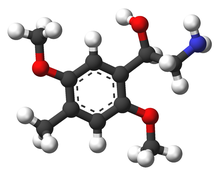
BOHD (4-methyl-2,5-dimethoxy-beta-hydroxyphenethylamine) is a lesser-known psychedelic drug. It is the beta-hydroxy derivative of 2C-D. BOHD was first synthesized by Alexander Shulgin. In his book PiHKAL, the minimum dosage is listed as 50 mg, and the duration unknown. BOHD produces a marked drop in blood pressure. Very little data exists about the pharmacological properties, metabolism, and toxicity of BOHD.
Legality
United Kingdom
This substance is a Class A drug in the Drugs controlled by the UK Misuse of Drugs Act.
United States
In the U.S., this substance is a Schedule 1 isomer of Mescaline.